
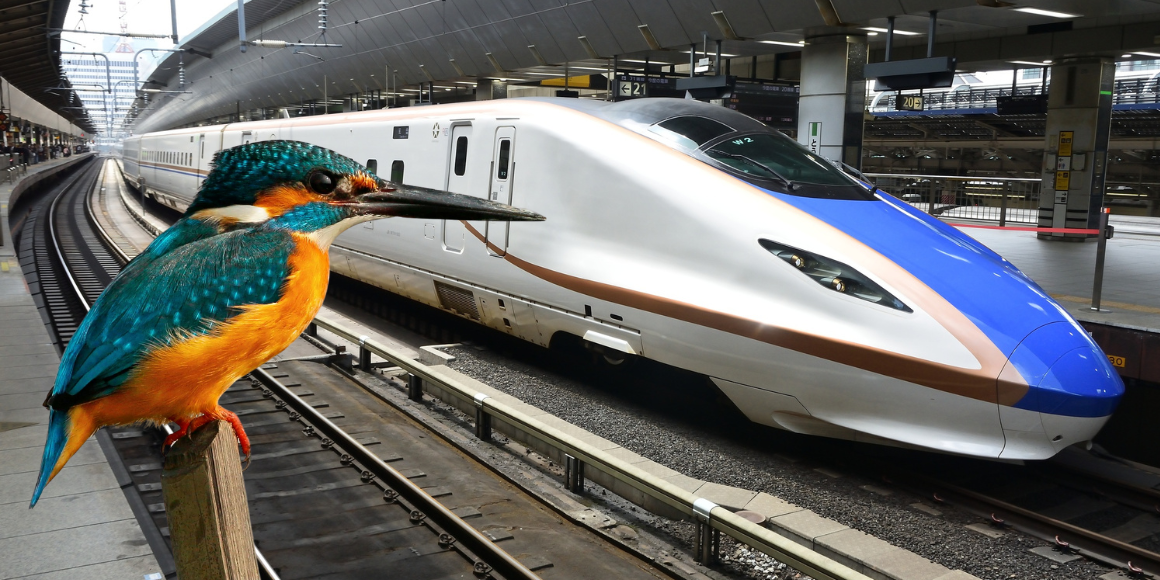
Picture a laboratory where 3.8 billion years of research and development have produced solutions to virtually every engineering challenge humanity faces today. This laboratory exists - it's called Earth, and its design innovations are encoded in the DNA of every living organism. Bionic design, also known as biomimicry or biomimetics, is the practice of learning from and emulating nature's time-tested patterns, strategies, and systems to solve human design challenges. This isn't mere aesthetic inspiration - it's a rigorous methodology that translates biological principles into functional innovations across industries from transportation to medical technology.
As climate crisis accelerates and resource scarcity intensifies, biomimicry offers transformative solutions: designs that use less energy, generate zero waste, and work in harmony with living systems. The economic potential is substantial. The global biomimetics market was valued at USD 33.59 billion in 2024 and is projected to reach USD 90.56 billion by 2032, growing at 13.2% annually. Consider Japan's Shinkansen bullet train, redesigned with a nose inspired by the kingfisher's beak - 10% faster, 15% more energy-efficient, and eliminating the disruptive sonic boom that once rattled buildings near tunnels. When one design change delivers such compounding benefits, it demonstrates why biomimicry represents a fundamental shift in how we approach innovation.
.png)
Historical context and evolution
Humans have looked to nature for design inspiration since antiquity, but the formalization of biomimicry as a discipline is surprisingly recent. Leonardo da Vinci's 15th-century sketches of flying machines meticulously studied bird anatomy and wing mechanics, representing perhaps the earliest documented attempt at systematic biological-to-engineering translation. Centuries later, German aviation pioneer Otto Lilienthal conducted over 2,000 glider flights in the 1890s, his wing designs based on careful measurements of stork skeletons.
The modern field emerged from two parallel developments. In the 1950s, American biophysicist Otto Schmitt developed the concept of “biomimetics” during his doctoral research, engineering the Schmitt trigger by studying nerve propagation in squid. By 1957, he had described biomimetics as the systematic transfer of ideas and analogues from biology to technology. Around the same time, US Air Force physician Jack E. Steele introduced the term “bionics”, which was formally used as the title of a 1960 symposium at Wright‑Patterson Air Force Base on applying biological principles to engineering systems. While “biomimetics” and “bionics” are often used interchangeably today, their distinct origins reflect the field’s interdisciplinary roots.
Yet biomimicry remained largely peripheral to mainstream engineering until 1997, when biologist Janine Benyus published "Biomimicry: Innovation Inspired by Nature", a seminal work that articulated biomimicry not merely as design inspiration but as a survival strategy for industrial civilization. Benyus argued that after 3.8 billion years of evolution, organisms have already solved most problems humans encounter - without depleting resources, creating toxic waste, or destabilizing ecosystems.
The evolution of tools has dramatically accelerated biomimicry's application. Early pioneers like da Vinci relied on sketches and physical models. Today's researchers employ computational fluid dynamics simulations, electron microscopy to image nanoscale structures, and machine learning algorithms that identify patterns across millions of species. The establishment of the Biomimicry Institute in 2006 and the launch of AskNature.org - a free database now cataloging over 1,800 biological strategies organized by function - has democratized access to nature's design library. What began with isolated examples of bio-inspired invention has matured into an institutionalized field with standardized processes, interdisciplinary collaboration frameworks, and growing recognition in engineering curricula and corporate R&D departments.
In 2025, the Biomimicry Institute launched its Co-Lab focused on Buildings, Cities, and Infrastructure, signaling a sector-wide shift toward nature-positive design where built environments function like forest ecosystems.
The three pillars of bionic design
Biomimicry operates across three distinct but interconnected levels, each offering unique pathways from biological observation to engineered solution.
Morphological biomimicry: form as function
Morphological biomimicry imitates shapes, structures, and physical forms - learning from how organisms are built. The Eastgate Centre in Harare, Zimbabwe, exemplifies this approach. Architect Mick Pearce studied how termite mounds maintain steady interior temperatures despite extreme external fluctuations, discovering that termites continuously open and close heating and cooling vents throughout their structures. Pearce translated this passive ventilation system into a mid-rise office complex using thermal mass and strategically positioned air channels. The building draws cool night air through its structure, absorbs heat during the day through concrete walls, and exhausts warm air through chimneys - no conventional air conditioning required. The result: Eastgate consumes 90% less energy for climate control than comparable buildings.
Similarly, Mercedes-Benz engineers designing the experimental Bionic concept car studied the boxfish, whose rigid, boxy exoskeleton seems aerodynamically improbable yet moves through water with remarkable efficiency. The resulting vehicle achieved a drag coefficient of just 0.19, exceptionally low for a compact car, while maintaining structural rigidity and reducing fuel consumption by about 20% compared to a similar production model.
Functional biomimicry: process over form
Functional biomimicry replicates mechanisms, behaviors, and processes regardless of underlying structure. The lotus effect provides the canonical example. German botanist Wilhelm Barthlott, studying plant surfaces since the late 1980s, discovered that lotus leaves remain pristine because of their unique surface architecture: microscopic wax crystals form a dual-scale roughness causing water droplets to bead up and roll off, carrying dirt particles with them. His groundbreaking 1997 publication explained this superhydrophobic surface, which achieves water contact angles exceeding 155° with sliding angles below 5°. Engineers have translated this principle into self-cleaning coatings for building facades, paints, textiles, solar panels, and medical devices.
Gecko feet present another functional marvel - scaling vertical glass using van der Waals forces generated by millions of nano-scale setae on their toe pads. Researchers have created reversible adhesives mimicking this mechanism for applications in robotics, medical bandages, and reusable mounting systems.
Ecosystem biomimicry: systems-level integration
The most profound pillar is ecosystem biomimicry, which mimics relationships, circular flows, and holistic systems rather than individual organisms. Natural ecosystems operate on closed-loop principles where waste from one organism becomes food for another. Industrial symbiosis applies this concept: grouping manufacturing facilities so that heat, water, and material waste from one becomes input for another, approaching zero aggregate waste.
The Biomimicry Design Spiral methodology guides practitioners through six stages: identify the design challenge, biologize the question by translating it into biological terms, discover natural models, abstract underlying principles, emulate nature’s strategies in an engineering context, and evaluate the result against Life’s Principles, nature’s unifying patterns of sustainability.
.png)
Cross-industry applications
Transportation and Aerodynamics
The Shinkansen Series 500 bullet train transformation stands as biomimicry's most celebrated transportation success. In the 1990s, these high-speed trains generated thunderous sonic booms when exiting tunnels - air compression waves loud enough to violate noise pollution regulations. Engineer Eiji Nakatsu, an avid birdwatcher, observed how kingfishers dive from air into water with barely a ripple, their elongated beaks allowing gradual pressure transition. Nakatsu's team redesigned the train's nose to mimic this geometry. Beyond eliminating the tunnel boom, the modification improved energy efficiency by 15% and increased speed by 10%.
Humpback whale flippers have revolutionized wind turbine design. These marine mammals exhibit improbable agility for their size, executing tight underwater turns while hunting. Biologist Frank Fish discovered that tubercles - rounded bumps along the leading edge of whale flippers - were responsible. Wind tunnel testing revealed that these tubercles delay flow separation, increase lift by 8%, reduce drag by 32%, and allow a 40% increase in angle of attack before stalling. Applied to wind turbine blades, this translates to improved efficiency especially at lower wind speeds and reduced noise.
Shark skin-inspired riblets - microscopic grooves mimicking dermal denticles - have been applied to aircraft surfaces and ship hulls, reducing turbulent drag and improving fuel efficiency. Boxfish geometry continues inspiring vehicle design, demonstrating how nature solves conflicting requirements of structural strength and aerodynamic efficiency simultaneously.
Architecture and Built Environment
Beyond the Eastgate Centre, biomimetic architecture has expanded dramatically. The Eden Project in Cornwall, UK, employed soap bubble geometry - nature's solution for maximum volume with minimum surface area - to design geodesic biomes that are both structurally efficient and materially economical. Each hexagonal panel distributes stress evenly, allowing large-scale structures with remarkable strength-to-weight ratios.
Responsive building facades increasingly mimic biological adaptation mechanisms. Some designs replicate pine cone scales that open and close with humidity changes, automatically regulating building ventilation without sensors or motors. Others emulate plant stomata - pores that open to facilitate gas exchange and close to prevent water loss - creating facades that respond dynamically to temperature and light conditions.
Water collection systems inspired by the Namib Desert beetle have emerged as crucial innovations for arid regions. This insect survives in one of Earth's driest environments by harvesting fog: hydrophilic bumps on its back attract water droplets while hydrophobic channels guide collected moisture to its mouth. In 2025, PolyGone Systems deployed aquatic‑plant‑root‑inspired microplastic filters that capture up to 98% of microplastics in tests using passive, low‑energy filtration rather than energy‑intensive treatment systems.
Materials Science and Manufacturing
Velcro remains biomimicry's most ubiquitous material innovation. Swiss engineer George de Mestral invented it in 1941 after examining burrs clinging to his dog's fur under a microscope, revealing hooks that caught on fabric loops.
Spider silk represents a kind of holy grail of biomimetic materials: on a weight basis, some silks can rival or exceed high‑grade steel in tensile strength while remaining elastic, biodegradable, and produced at ambient temperature from protein and water. Researchers have engineered bacteria and yeast to produce recombinant spider silk proteins, creating synthetic fibers approaching natural silk's properties for applications in sutures, protective gear, and high‑strength composites.
.png)
Self-healing materials mimic biological tissue repair. Concrete embedded with bacteria that produce limestone when exposed to water can seal its own cracks. Polymers containing microencapsulated healing agents rupture when damaged, releasing compounds that polymerize and restore material integrity. In 2025, innovations included lab-grown wood tissue from plant cells, eliminating the need to cut trees while producing zero waste.
Lotus-effect coatings now protect everything from building facades to surgical instruments, with applications expanding to perovskite solar cells where self-cleaning surfaces prevent contamination during manufacturing.
Medical Technology
Biomimicry pervades medical innovation. Cochlear implants translate sound into electrical signals mimicking the inner ear's frequency-to-location mapping, restoring hearing to hundreds of thousands of patients. Advanced prosthetics increasingly incorporate neural interfaces that interpret electrical signals from remaining muscles, allowing intuitive control.
Drug delivery systems inspired by cellular mechanisms - including liposomes that mimic cell membranes and nanoparticles that exploit cellular uptake pathways - allow targeted therapy with reduced side effects. Smart bandages incorporating clotting cascade principles accelerate wound healing while embedded sensors monitor infection markers. In 2025, researchers developed medical adhesives inspired by mussel proteins, offering alternatives to traditional glues and staples that can damage tissue.
Energy and Sustainability
Photosynthesis remains nature's masterclass in energy conversion. While artificial photosynthesis systems haven't matched biological efficiency, bio-inspired solar cell architectures—including dye-sensitized cells mimicking chlorophyll and hierarchical nanostructures optimizing light capture - continue advancing.
Fog-harvesting systems inspired by desert beetles provide potable water in water-stressed regions, with large-scale installations in Chile, Morocco, and California collecting thousands of liters daily from atmospheric moisture. Building ventilation systems inspired by prairie dog burrows - which use pressure differentials and strategic tunnel placement to maintain airflow without mechanical systems - demonstrate how ecosystem-level observations translate to human infrastructure.
The Biomimicry Design Process
The Biomimicry Design Spiral provides a structured methodology for translating biological principles into engineering solutions. The process begins by identifying the design challenge clearly - whether improving aerodynamics, reducing energy consumption, or creating self-cleaning surfaces. The critical second step is biologizing the question: translating engineering challenges into biological terms. Instead of asking "How do we reduce drag?" engineers ask "How do organisms move efficiently through fluids?".
Discovery follows, using resources like AskNature.org's database of over 1,800 biological strategies organized by function. This phase often requires consulting biologists and ecologists who understand the nuances of natural systems. The fourth step - abstracting design principles - distinguishes successful biomimicry from literal copying. Engineers must identify transferable strategies rather than replicating entire organisms. The kingfisher's beak inspired the bullet train's nose not because trains should look like birds, but because the underlying principle of gradual pressure transition applies to both diving into water and entering compressed tunnel air.
Emulation applies abstracted principles to engineering contexts, typically requiring iteration between biological understanding and technical constraints. Finally, evaluation against Life's Principles tests whether solutions align with nature's sustainability framework: resource efficiency, adaptation to changing conditions, and resilience through redundancy.
Modern tools accelerate this process dramatically. AI and machine learning now screen vast biological databases, identifying patterns humans might miss. Computational simulations model bio-inspired structures before physical prototyping. 3D printing enables rapid iteration of complex geometries impossible with traditional manufacturing. Cross-disciplinary collaboration has become essential - bringing together designers, biologists, materials scientists, and engineers who speak different professional languages but share commitment to learning from life's genius.
.png)
Sustainability and circular economy
Nature's defining characteristic is its adherence to closed-loop principles: in mature ecosystems, waste doesn't exist - one organism's output becomes another's input. This stands in stark contrast to industrial civilization's linear "take-make-dispose" model where resources flow from extraction through manufacturing and consumption to disposal, generating pollution at every stage.
Biomimicry naturally leads to sustainable solutions because biological organisms face the same constraints human designers do - limited energy, scarce materials, and the imperative to minimize waste in competitive environments. What nature terms "Life's Principles" - including resource efficiency, adaptation to changing conditions, and resilience through redundancy - provides a framework for evaluating whether designs will prove sustainable at scale.
Consider material sourcing: organisms build complex structures from whatever materials exist locally, producing spider silk and bone from ambient-temperature processes using readily available elements. They avoid rare earth elements, toxic heavy metals, and energy-intensive synthesis pathways. Industrial processes typically demand the opposite - rare materials, high temperatures, corrosive chemicals.
Biodegradable materials inspired by natural polymers offer alternatives to persistent plastics. Mycelium-based packaging, bacterial cellulose textiles, and algae-derived bioplastics decompose at end-of-life, returning nutrients to biological cycles rather than accumulating in landfills and oceans. The economic advantages extend beyond environmental benefits: companies implementing circular biomimetic design report reduced material costs, market differentiation, regulatory compliance advantages, and enhanced brand value among sustainability-conscious consumers.
This holistic approach to product development - considering the entire lifecycle from first sketch through end-of-life - mirrors how ecosystems operate. At Mindsailors, this philosophy forms the foundation of every project, where sustainability isn't added as an afterthought but integrated from the very beginning, much like how natural systems inherently optimize for longevity and resource efficiency.
Biomimicry directly supports multiple UN Sustainable Development Goals: SDG 9 (Industry, Innovation, and Infrastructure) through bio-inspired material efficiency, SDG 12 (Responsible Consumption and Production) via circular economy principles, and SDG 13 (Climate Action) by reducing resource extraction and carbon emissions. In 2025, the biomimetics market's growth reflected this alignment, with companies increasingly recognizing that nature's strategies offer not just environmental benefits but competitive economic advantages.
Biomimicry in practice: real-world design challenges
Translating biological inspiration into functional products requires navigating complex constraints. Designing for extreme environments increasingly draws from extremophile organisms - bacteria thriving in hydrothermal vents, tardigrades surviving space vacuum, or Emperor penguins enduring Antarctic winters. These organisms inform materials that withstand temperature extremes, radiation resistance, and pressure differentials.
Durability and longevity present another frontier. While planned obsolescence dominates consumer electronics, natural materials like nacre (mother-of-pearl) and bone demonstrate how hierarchical structures achieve both toughness and longevity, withstanding decades of mechanical stress without catastrophic failure. Translating these principles creates products designed for lifecycle extension rather than replacement.
Multi-functionality - how single organisms solve multiple problems simultaneously - offers profound design lessons. A polar bear's fur provides insulation, water repellency, UV protection, and camouflage through a single integrated structure. When developing emergency medical equipment like AED defibrillator stations, designers must balance environmental resilience (protection against moisture, frost, and heat year-round) with accessibility and reliability - principles found throughout nature's survival strategies. Such projects demonstrate how bionic design thinking extends beyond aesthetics to create solutions with genuine social impact.
Adaptive design explores how products might evolve with user needs, analogous to how organisms adapt to changing environments. Shape-memory alloys, responsive textiles, and modular architectures all draw inspiration from biological adaptation mechanisms. In 2025, innovations included temperature-responsive materials inspired by cactus structures and self-assembling systems mimicking cellular organization.
Challenges and Limitations
Despite its promise, biomimicry faces substantial obstacles. Natural systems exhibit complexity that often defies complete replication - a single protein's folding involves thousands of atomic interactions influenced by electromagnetic forces, entropy, and quantum effects. Engineers must identify which aspects of biological design are essential and which are evolutionary artifacts irrelevant to the engineering challenge.
Scale challenges abound. Mechanisms that work elegantly at microscopic dimensions - for example, each gecko hair branching into hundreds of spatulae only a few hundred nanometers wide - do not automatically translate to human‑scale applications where different physical forces dominate. Manufacturing techniques capable of producing such biomimetic nanostructures at commercial volumes and costs are still under active development.
Cost barriers present immediate hurdles. Biomimetic R&D is research-intensive, requiring collaboration between biologists, materials scientists, and engineers - disciplines with different methodologies, vocabularies, and research timelines. Initial investment in understanding biological systems, abstracting principles, and developing manufacturing processes can exceed conventional design approaches, though lifecycle costs often favor biomimetic solutions.
Knowledge gaps persist. Despite cataloging efforts like AskNature, humanity has scientifically described only about 1.5–2 million species out of many millions thought to exist worldwide, with some estimates suggesting the true total may reach into the tens of millions. Countless biological solutions remain undiscovered, and many known organisms have never been examined for their engineering potential. Critically, biodiversity loss threatens this “library of innovations” - each extinction removes solutions refined over millions of years, foreclosing future biomimetic possibilities.
Intellectual property presents ethical quandaries. While biomimetic innovations involve human ingenuity in translation and application, the fundamental principles derive from living systems. Market acceptance also varies - conservative industries with established supply chains and regulatory frameworks resist novel approaches regardless of performance advantages. Time investment can deter adoption, as following the complete Biomimicry Design Spiral requires more upfront time than conventional design approaches, though iterations often proceed faster once principles are understood.
Future Trends and 2026-2030 Outlook
The convergence of biomimicry with artificial intelligence represents the field's most transformative frontier. Machine learning algorithms can now screen vast biological databases, identifying patterns and principles humans might miss. Researchers employ AI-driven generative design to create structures like carbon nanolattices - stronger than steel, lighter than foam - by exploring design spaces inspired by biological hierarchies. Rather than engineers studying individual organisms, AI analyzes millions of species simultaneously, correlating functional properties with structural features and generating novel designs that blend insights from multiple biological systems.
Living materials represent another emerging frontier - literally incorporating living organisms into structures. Self-healing concrete containing dormant bacteria, bio-fabricated textiles grown from mycelium, and photosynthetic building facades with embedded algae blur boundaries between biological and engineered systems. In 2025, New Dawn Bio successfully grew real wood tissue in laboratories using plant cells, producing custom shapes without cutting trees. These materials don't just mimic life - they are alive, bringing metabolic capabilities to infrastructure.
Bio-inspired electronics increasingly mimic neural architecture. Neuromorphic chips replicate brain-like parallel processing and adaptive learning, achieving orders of magnitude better energy efficiency than conventional computing for pattern recognition tasks. Flexible electronics inspired by octopus skin could enable conformable sensors, stretchable displays, and implantable medical devices that move naturally with tissue.
4D printing - additive manufacturing of materials programmed to transform over time in response to environmental stimuli - takes inspiration from biological growth and movement. Structures could self-assemble, self-repair, or adapt their configuration like plants tracking sunlight or pine cones releasing seeds.
Deep-sea organisms and extremophiles offer untapped inspiration. Creatures thriving at crushing pressures, near hydrothermal vents, or in acidic environments possess adaptations humans barely understand but desperately need for applications from deep-sea exploration to industrial processing under harsh conditions.
Market projections reflect growing adoption. The biomimetics market's projected growth from USD 33.59 billion in 2024 to USD 90.56 billion by 2032 (13.2% CAGR) indicates accelerating commercial interest. According to MarketsandMarkets, the global biomaterials market was valued at USD 45.15 billion in 2024 and is projected to reach USD 68.93 billion by 2030, underscoring the rapid expansion of nature-inspired materials in medicine and industry.
Educational initiatives bring biomimicry into design curricula at leading institutions worldwide. As the field advances, cross-disciplinary collaboration becomes increasingly vital - bringing together industrial designers, biologists, materials scientists, and engineers. This integrated approach to problem-solving mirrors the interconnected nature of ecosystems themselves, where solutions emerge from diverse systems working in harmony.
The Biomimicry Institute's 2025 Ray of Hope Accelerator cohort showcased this momentum, featuring ten startups addressing challenges from wildfire prevention to Amazonian seed-inspired low-wind-speed energy generation. Corporate adoption continues expanding as companies recognize biomimicry's potential for competitive advantage, risk mitigation through diversified R&D approaches, and alignment with consumer demand for sustainable products. As one industry report noted, "2025 will likely be remembered as the moment when biomimicry transitioned from a specialized design methodology into a dominant industrial strategy".
.png)
Conclusion
Biomimicry represents more than a design methodology - it's a paradigm shift in humanity's relationship with the living world, from extraction and domination toward partnership and mutual learning. For 3.8 billion years, evolutionary pressures have refined solutions to problems of energy efficiency, material strength, adaptation, and resilience. These solutions surround us, encoded in every organism, waiting to inform designs that could reshape human civilization's trajectory.
The urgency extends beyond innovation to preservation. Every species extinction eliminates not just ecological diversity but practical knowledge - solutions to problems we haven't yet recognized. Protecting biodiversity is protecting humanity's design library, the accumulated R&D of evolution itself.
Designers must become students of biology, engineers must collaborate with ecologists, and business leaders must recognize that nature's strategies offer economic advantages through resource efficiency and durability. Industries embracing biomimetic principles position themselves advantageously as regulations tighten and markets reward sustainability.
The vision ahead is compelling - cities that function like forests, manufacturing systems that emulate ecosystems, and materials that grow rather than being extracted. This isn't utopian fantasy but practical application of principles already proven across billions of species. We stand at a threshold where our capacity to understand and translate nature's genius has never been greater, powered by AI, advanced manufacturing, and unprecedented computational capability.




Schedule an initial talk and get to know us better! You already have a basic brief? Send it over so we can have a more productive first meeting!
a meeting
