
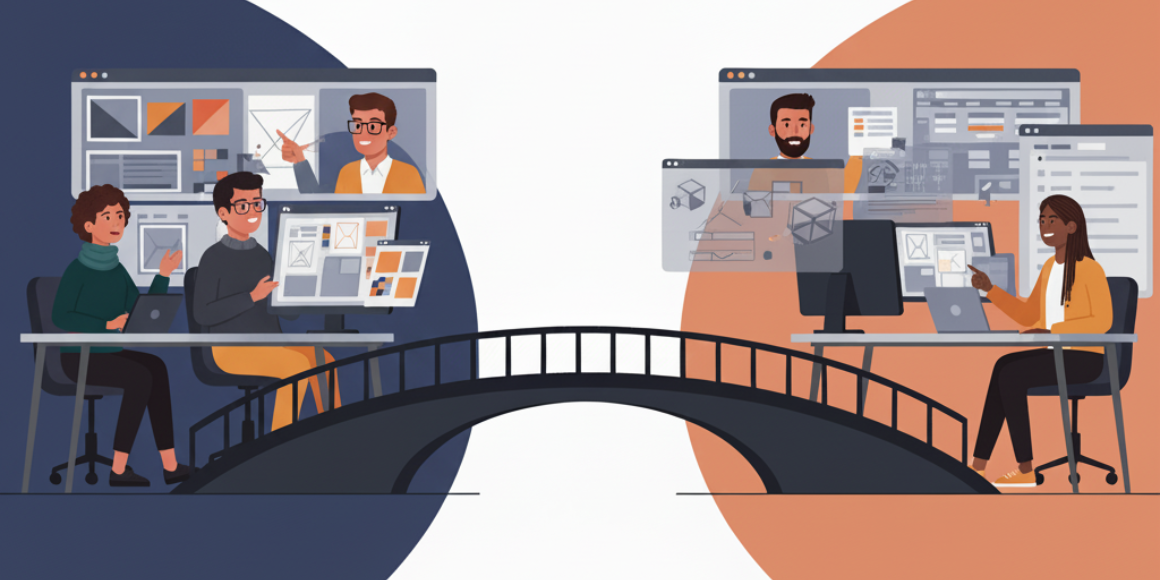
Communication Infrastructure That Works
Successful remote design teams don't just adopt tools—they build communication ecosystems. The shift from office-based to distributed work exposes gaps that spontaneous hallway conversations once filled. A 2020 study commissioned by Lucid Software and conducted by Method Research surveyed 1,000 full-time desk workers in the United States who worked remotely at least three days per week. The research found that 44% of remote employees felt they were working in a bubble, unaware of their colleagues' work, while 33% cited fewer casual moments for spontaneous brainstorming as a primary reason for decreased creativity.
Establishing clear communication channels begins with defining purpose. Slack or Microsoft Teams handle quick updates and informal interactions, Zoom facilitates face-to-face discussions for complex topics, and design-specific tools like Figma enable real-time collaboration. Creating a communication matrix outlining when to use each channel prevents overlap and reduces misunderstandings.
Regular check-ins form the rhythm that keeps distributed teams connected. Daily stand-ups, weekly design reviews, and monthly brainstorming sessions provide multiple touchpoints for collaboration. These shouldn't be marathon sessions - brief, focused meetings respect everyone's time while maintaining team connectivity. Buffer's 2023 State of Remote Work report - which surveyed fully remote workers globally - found that 23% of remote employees identified loneliness as their second biggest challenge (after collaboration and communication issues), making these structured touchpoints essential rather than optional.
Balancing Synchronous and Asynchronous Collaboration
Effective remote design teams master the interplay between real-time and asynchronous work. Synchronous collaboration excels for brainstorming sessions, design critiques, and consensus-driven decisions. Asynchronous collaboration shines for design exploration, documentation, and iterative feedback.
Asynchronous workflows offer flexibility for team members across time zones and enable employees to work during their most productive hours. Success requires establishing communication norms upfront - teams should collectively decide what merits synchronous discussion versus asynchronous contribution.
Documentation becomes the catalyst for effective asynchronous collaboration. High-quality documentation captures design thinking in the moment as easily accessible reference. This means intentional recording of design decisions, rationale, and context - not conversations scattered across Slack threads. Teams forcing documentation-first approaches often discover that decisions improve and stress decreases when writing precedes discussing.
Psychological Safety and Creative Culture
Technology enables remote collaboration, but psychological safety fuels it. Harvard Business School professor Amy Edmondson defines psychological safety as the ability to bring up genuine opinions, ask questions, or own mistakes without risking punishment or damaged social capital.
Building psychological safety remotely requires deliberate effort. Leaders must model vulnerability, encourage team members to share ideas without fear of judgment, and foster trust, empathy, and respect.
Virtual team-building activities transcend corporate cliché when done thoughtfully. Monthly team challenges, coffee roulette pairings for casual video chats, and micro AMAs where anyone shares expertise create connections that make distance disappear.
Technical Tools That Enhance Creativity
The right tools amplify collaboration without overwhelming teams. Figma has emerged as the gold standard for remote design collaboration in 2025, offering real-time co-editing, in-context commenting, version history, and developer-friendly handoff. Multiple designers can work simultaneously on the same file, maintaining continuity without version control nightmares.
Complementary tools round out the ecosystem. Miro and FigJam provide digital whiteboarding for brainstorming. Project management platforms like Asana, Trello, or Notion track tasks and timelines. Loom enables asynchronous video explanations, allowing designers to walk through concepts without scheduling meetings. The critical factor isn't quantity but integration - choosing tools that work smoothly together.
Recent Figma updates illustrate ongoing evolution. Figma AI's First Draft generates comprehensive design drafts from basic concepts. Figma Sites allows designers to publish designs directly to the web. These capabilities transform Figma from a design tool into a creative hub where design, content, and development happen collaboratively.
Design Critiques That Work Remotely
Design critiques form the crucible where ideas get refined. The most effective remote critiques focus less on overcoming video conferencing limitations and more on strengthening the underlying process.
Preparation makes the difference. Share designs and critique guidelines before sessions, using collaborative tools that allow asynchronous commentary ahead of live discussion. During critiques, structure matters: brief introductions followed by each attendee highlighting their most important feedback, one by one, with discussion immediately following each comment.
Managing participation requires intentional facilitation. Use features like "raise hand" to keep things orderly and ensure everyone contributes. Set clear agendas, allocate specific time for each design, and define what type of feedback you're seeking - conceptual direction, visual polish, or usability concerns.
Workflows That Maintain Alignment
Remote design workflows require structure that adapts to project needs rather than imposing rigid frameworks. Design cycles should account for how closely designers work with other departments, team composition, and project size.
Centralized resources provide the clarity remote teams need. Creating a hub of all organizational work gives teams context for effective collaboration. This includes design systems, component libraries, brand guidelines, user research findings, and decision records. When centralized and accessible, these resources enable informed decisions without constant meetings.
Design handoffs demand particular attention in remote environments. Clear handoff processes prevent misunderstandings and save time. Document not just what was designed but why - the thinking behind decisions. Figma's developer mode provides CSS, iOS, and Android code snippets directly, reducing back-and-forth and accelerating implementation.
Measuring Success Without Micromanaging
Measuring design team productivity remotely requires shifting from activity tracking to outcome focus. Clear SMART goals and KPIs give remote workers direction while fostering accountability without surveillance.
Meaningful metrics include delivery consistency, quality of work, business impact, and team well-being rather than hours logged or meetings attended. Design velocity combined with quality feedback loops and time to handoff provide insights into team performance. Equally important are team engagement, morale, and work-life balance scores, which prevent burnout.
Onboarding New Designers Remotely
Remote onboarding sets the foundation for long-term success but requires intentional design. Schedule regular question-and-answer sessions and check-ins - often 15 minutes suffices - to prevent newcomers from feeling abandoned. Provide comprehensive access to information from day one, including user feedback data, old designs, user journey maps, and internal documentation.
Create checklists outlining what new hires should accomplish in their first day, week, 30 days, 60 days, and 90 days. Assign a buddy or mentor who serves as the go-to person for questions and guidance. Most importantly, solicit feedback at the end of the first week about what went well and what could improve.
The Path Forward
Remote design collaboration succeeds when teams treat it as a practice requiring continuous refinement rather than a problem requiring a single solution. The most effective distributed design teams combine robust technical infrastructure with deep attention to human needs - establishing clear communication channels while creating space for spontaneity, using powerful collaboration tools while prioritizing direct human connection, implementing structured workflows while preserving creative flexibility.
Teams that invest in psychological safety, master asynchronous collaboration, document their thinking, and maintain regular touchpoints don't just replicate office-based creativity - they often surpass it, accessing global talent, enabling deep work, and building more inclusive practices.


Schedule an initial talk and get to know us better! You already have a basic brief? Send it over so we can have a more productive first meeting!
a meeting
