
HELPBOX 365
INDUSTRY: MEDICAL
COUNTRY: POLAND
CLIENT: Centrum Ratownictwa Sp. z o.o.
SCOPE OF WORK:
- pre-design
- conceptual design
- final conceptual design
- mechanical design
- electronic circuit design
- firmware development
- design for manufacturing
- certification preparation
- production supervision
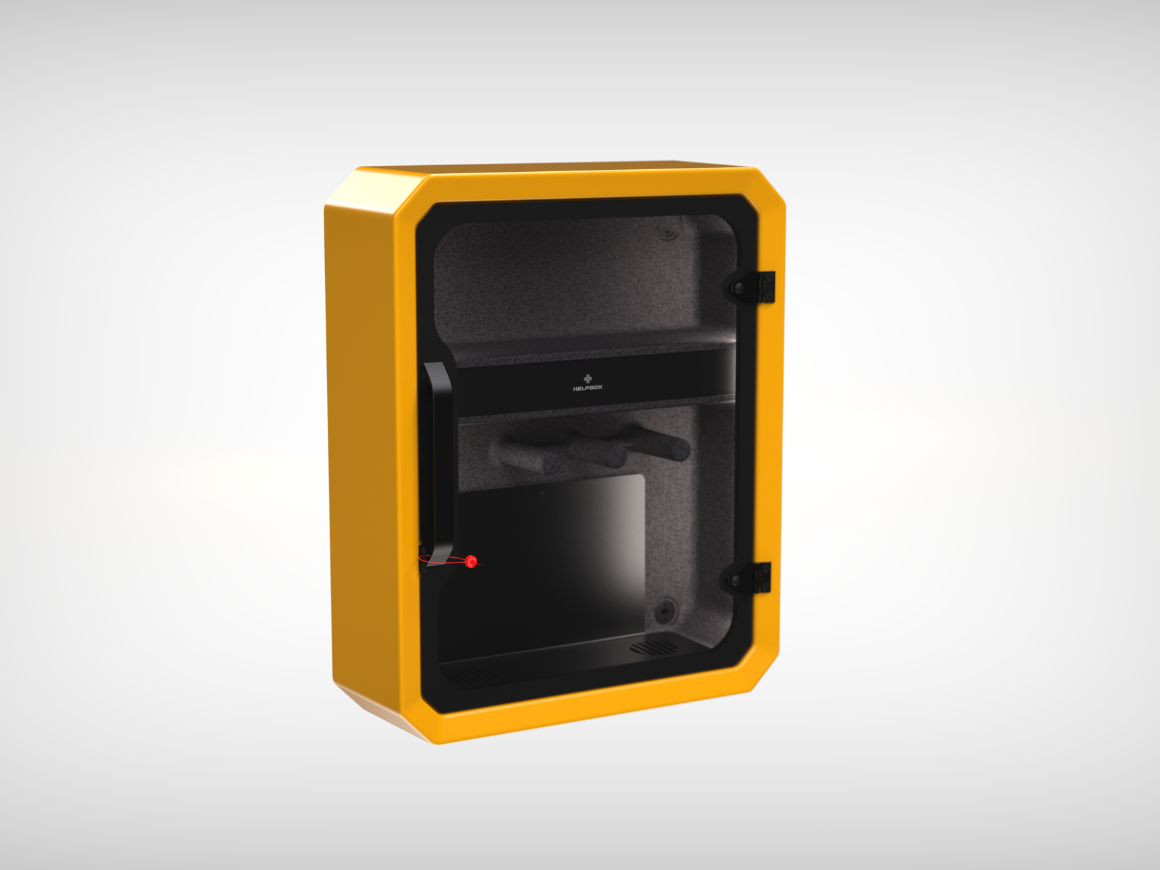
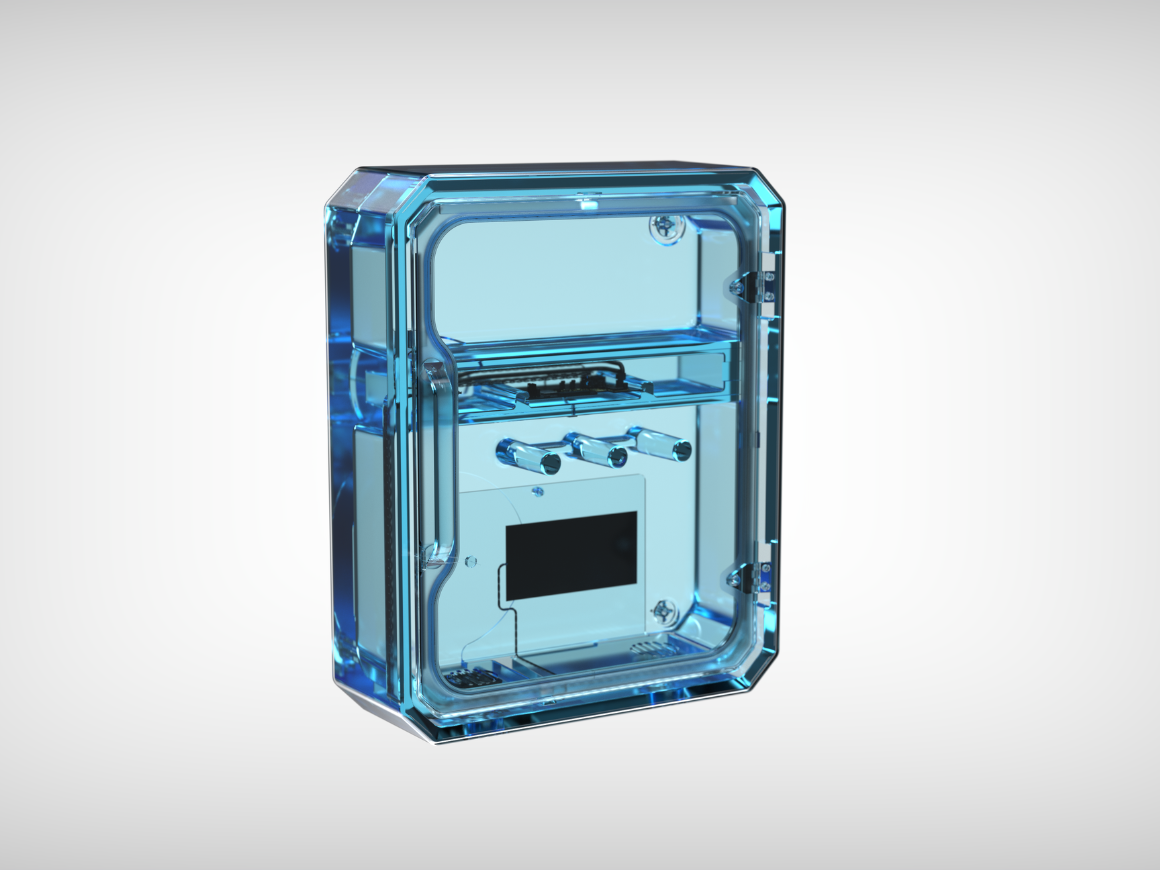
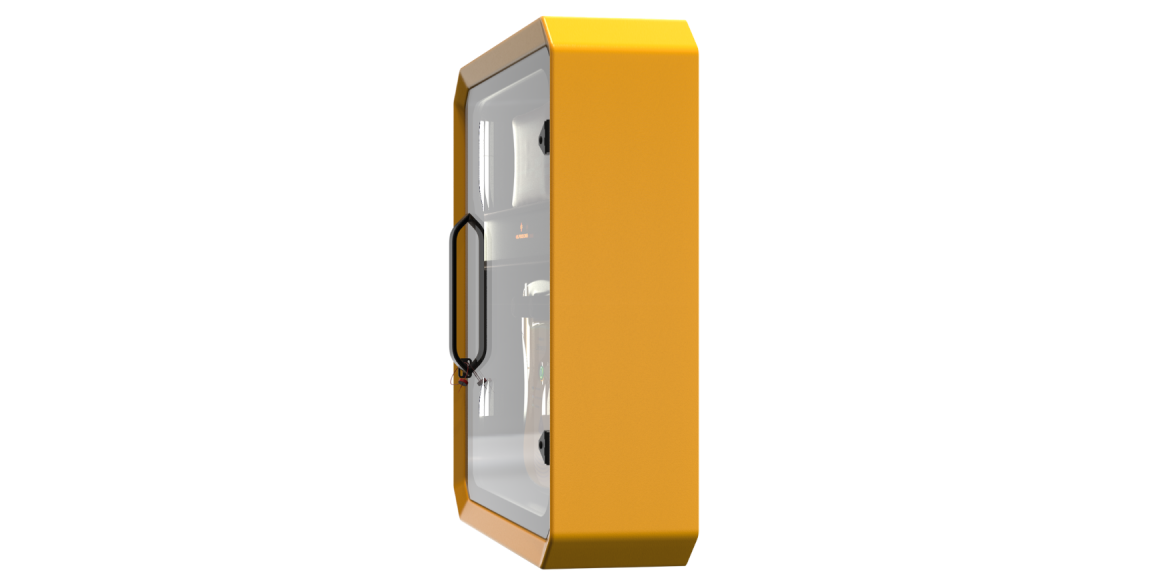
Helpbox 365 is a 24/7 monitored AED defibrillator storage station equipped with an integrated system that ensures maximum visibility, availability, and full readiness of the device - eliminating the risk of failure at a critical moment. From design to production, Helpbox 365 is the result of the collaborative work of designers, engineers, and first responders. Helpbox 365 supports the idea of universal access to AEDs and serves as a key component of public safety infrastructure.
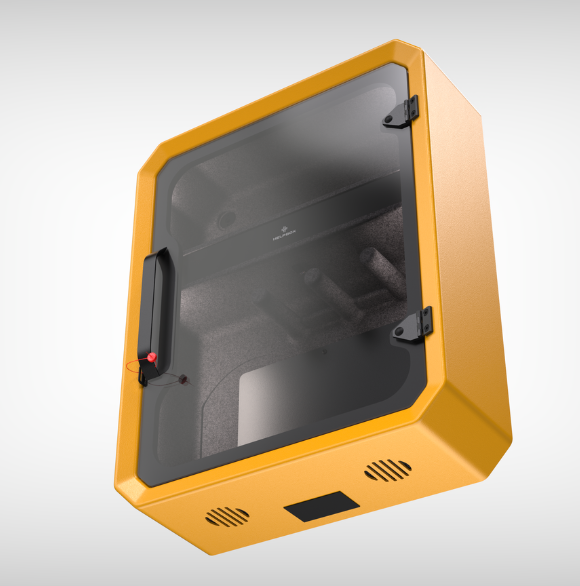
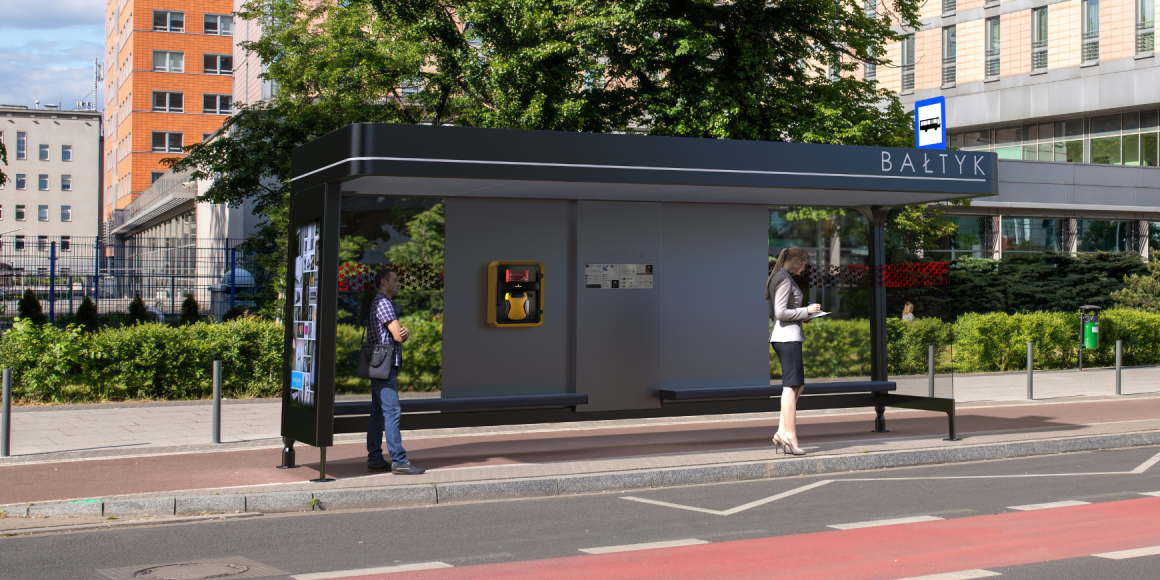
The project began as a side visualization accompanying another project we were running in parallel - our client, Centrum Ratownictwa Sp. z o.o., asked us to design a wall-mounted cabinet that could display the device from that project alongside an AED kit and a first-aid kit. The visualization we prepared sparked such strong interest among the client's potential customers that Centrum Ratownictwa decided to develop it into a full-fledged product. The entire process, from the initial brief to the start of production, took one year and two months.
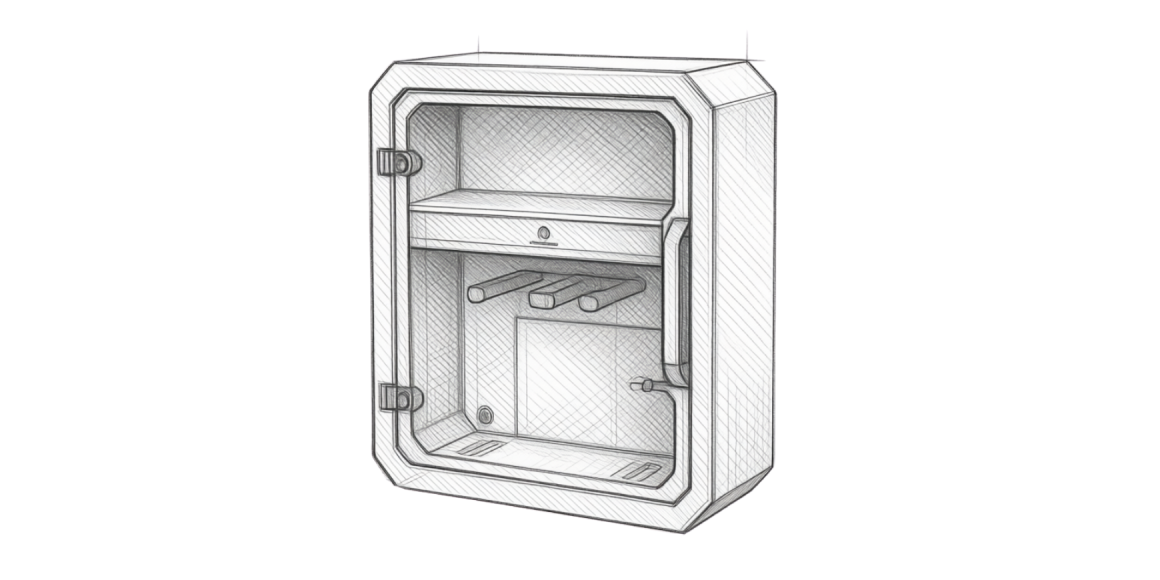
The initial scope of requirements focused on aesthetics and fitting three components - an AED, a first-aid kit, and an additional device, along with an onboard computer - which reflected the early visualization stage of the project. As the visualization began to take shape as a real product, we worked with the client to refine the full functional specification: a universal, networked station designed for use both indoors and outdoors, in public spaces and workplaces.
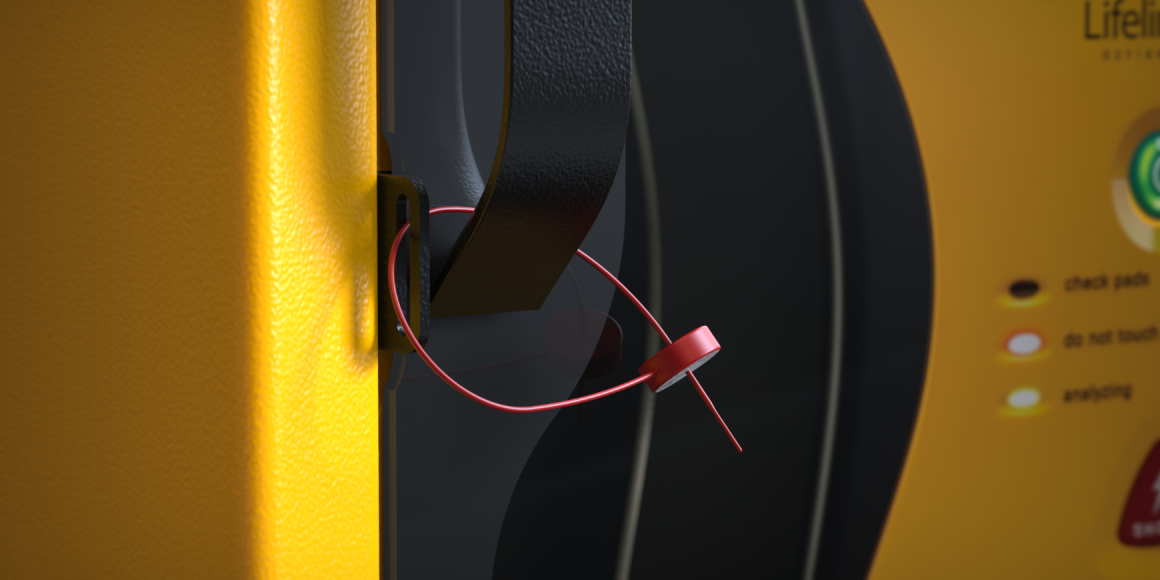
For this project, we departed from our usual approach of preparing 3-4 design concepts - we created only one version, which the client approved quickly, thanks to its strong visual quality. The key design idea was a transparent front (glass panel) that allows the cabinet's contents to be identified immediately - on one hand, this is a practical requirement (the user must know what's inside before opening the cabinet); on the other, it's a deliberate design choice aimed at building public awareness of defibrillators' presence in public spaces. To enable the fastest possible access to the cabinet's contents, instead of locks or breakable glass, we designed a tear-off seal and handle - eliminating the need to damage the front glass.
In addition to the front panel itself, another challenge was designing the shape of the entire enclosure. The cabinet shape we proposed in the visual concept ruled out the cost-effective use of bent and welded sheet metal for small production runs - the metal stamping dies would be too expensive, and welding would be too time-consuming and inconsistent.
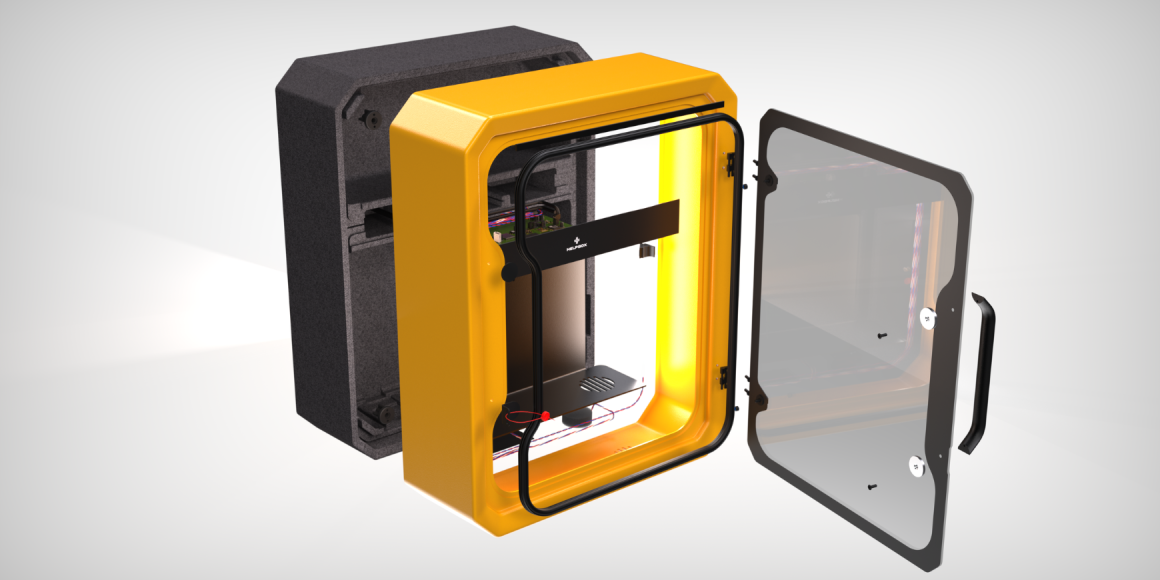
During the material analysis phase, we decided to use expanded polypropylene (EPP) for the interior of the housing and thermoformed ABS for the exterior - a technology previously unknown in this type of product, which best met the project’s needs. We originally planned to make the front panel out of plexiglass (PMMA), but this material warped and did not provide the required flatness, which made effective sealing impossible - we replaced it with tempered glass, which is also more weather-resistant and less prone to scratching. This change, however, had a side effect: glass has much higher thermal conductivity than plexiglass, which required a redesign of the heating system (a larger heater, different component layout). We had a great deal of freedom in terms of aesthetics, but when it came to choosing the technology and production methods, we consulted with the client on an ongoing basis, working together to find the best solutions.
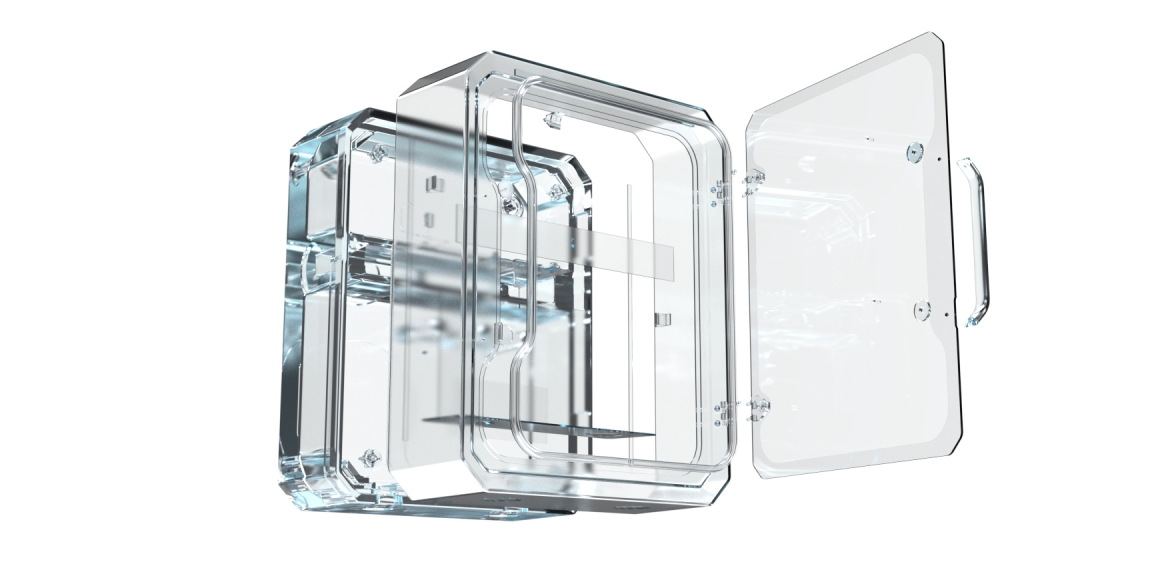
The mechanical components went through 3 to 5 iterations - the EPP molded part required the most changes (about 5 versions, the last three of which were purely cosmetic), and we collaborated with a specialized manufacturer of molded parts to refine it. The main design challenge was joining the EPP to the ABS housing, which required selecting the right adhesive. Another challenge was selecting the gasket: the original sealing design didn't work, and since the production tooling for these parts was already finalized, our options for redesign were very limited - nevertheless, after a series of tests, we managed to achieve a repeatable, watertight design.
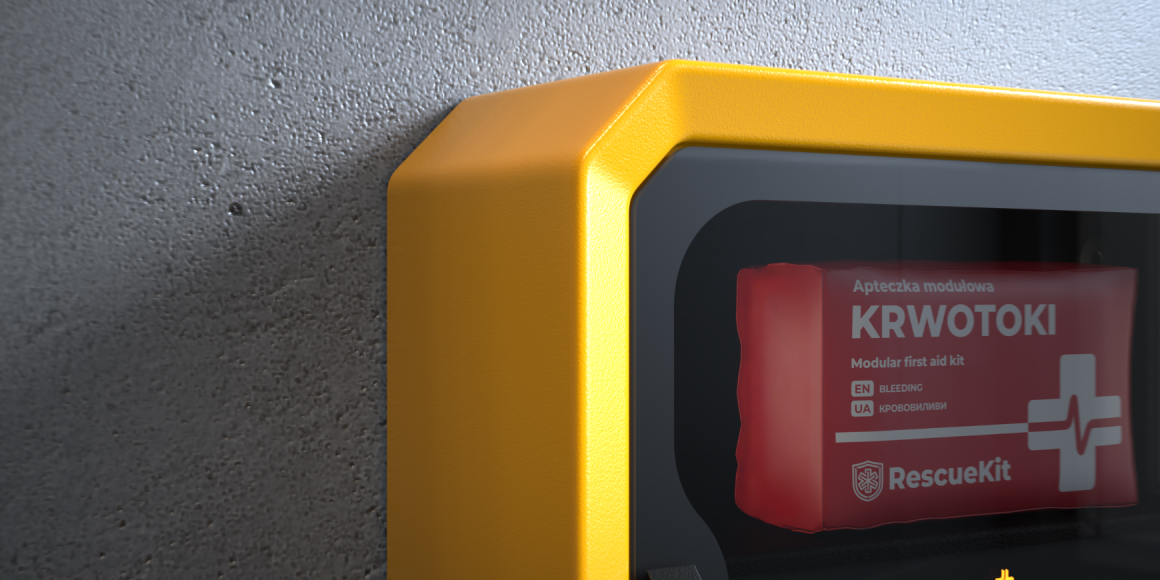
for manufacturing
The manufacturer suggested thickening the EPP walls, which we accepted without reservation, as it did not significantly affect the product but made production much easier. A greater challenge was the mismatch in demolding angles between the EPP and the thermoforming mold - we made a conscious decision to deviate from the standard technical recommendation in order to achieve a better fit between the two components, which required negotiating with the subcontractor to assume additional production risk. We based our cost optimization on using a single EPP molded part as both a thermal insulator and a carrier for most components (PCB, cable harnesses, fan) without the use of screws, minimizing the number of custom parts, and making maximum use of off-the-shelf components.
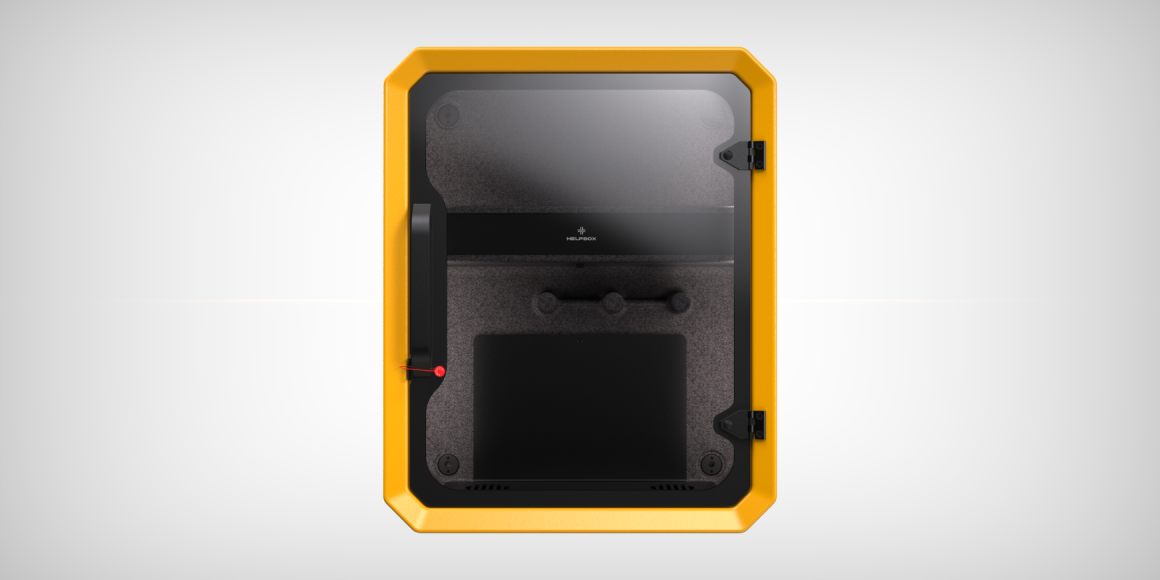
supervision
We recommended subcontractors to supply specific semi-finished products, while final assembly was entrusted to a company selected by the client. Our supervision included ensuring the integrity of the design and providing ongoing support in resolving assembly issues (e.g., a leaking gasket, a sagging glass panel), and we updated the technical documentation based on feedback from the production line. An experienced representative played a key role on the client's side; he had previously brought dozens of products to market and served as the primary point of contact between the contractors and us.
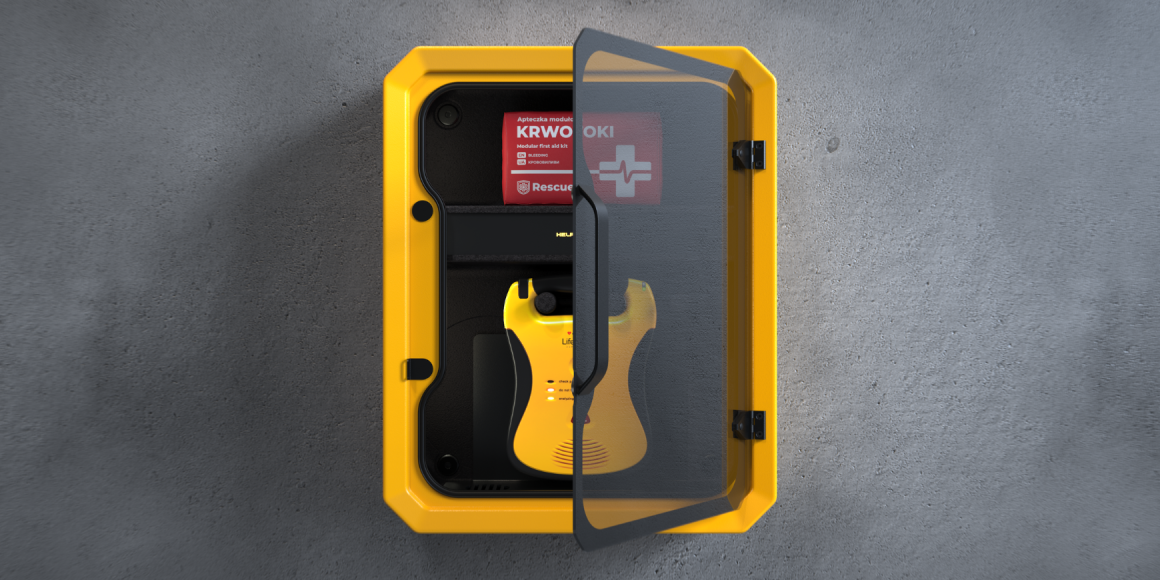
Helpbox 365 is Poland's first 24/7-monitored AED storage station, available around the clock, protecting the equipment from moisture, frost, heat, and dust. Centrum Ratownictwa has launched a nationwide initiative to install the first 100 stations in locations critical to public safety - in large cities, smaller towns, and rural areas. This project stands out in our portfolio as a combination of advanced electronics that communicate with a central management system and simple yet effective EPP technology - which we had not previously used in this product category.
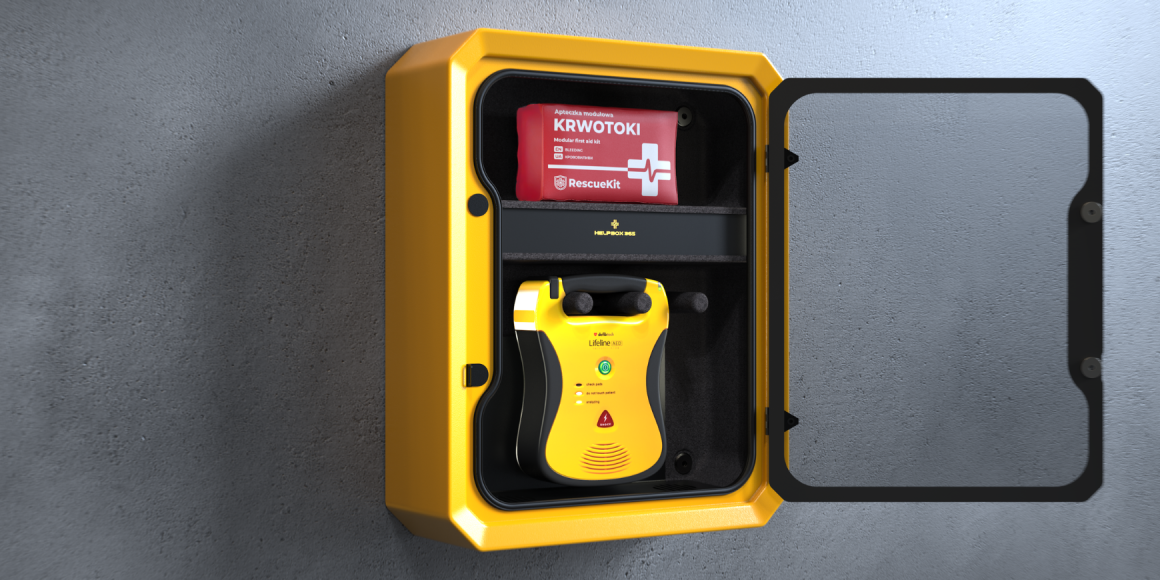
The scope of the project included developing a system to monitor the cabinet's contents and manage its microclimate, networked with Centrum Ratownictwa's central system. The system was designed to support sensors that detect the presence of equipment inside the cabinet, enabling full control over whether and when a given device was removed, and how long the cabinet remained open.
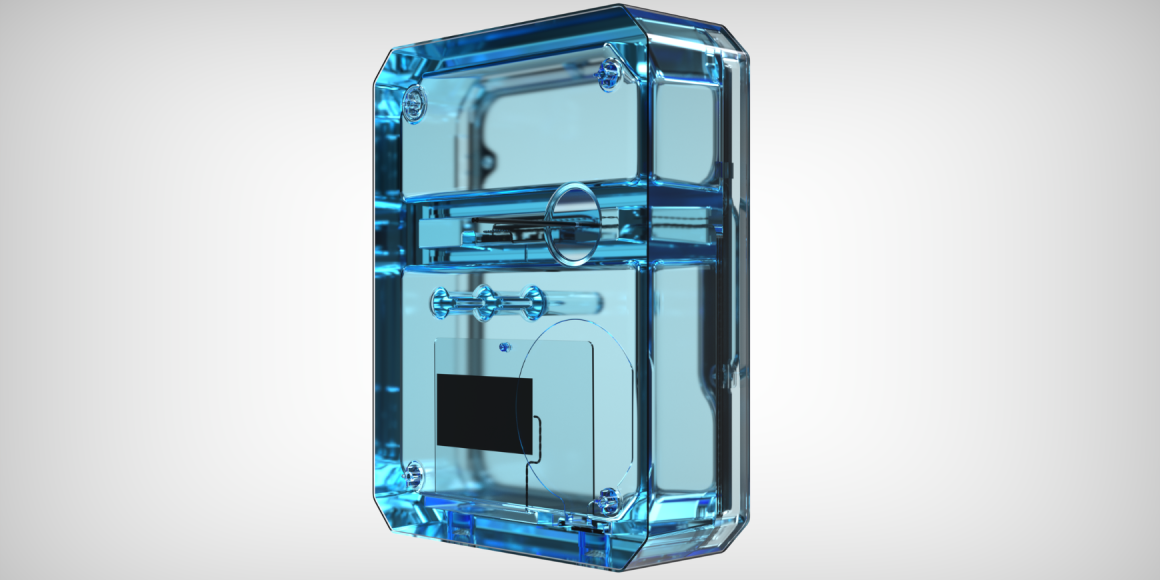
We identified the need for temperature and humidity control, as well as a door-opening sensor that triggers an alarm at the control center. The system communicates via Wi-Fi or LTE and must be compatible with the low-profile enclosure we designed.
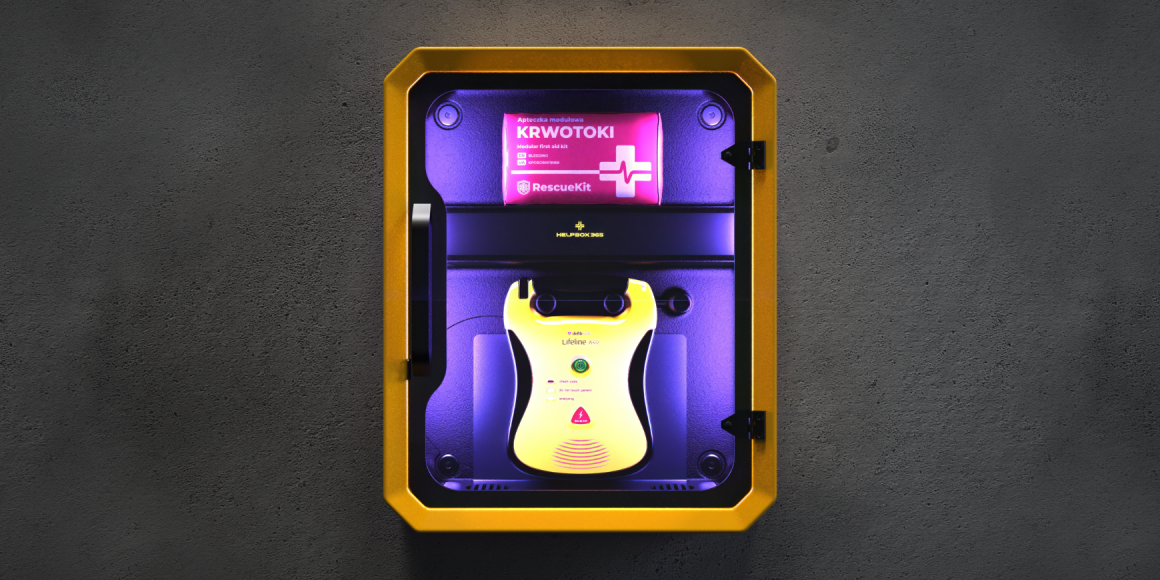
We designed the control system to work with four components: a heater, a fan, and temperature and humidity sensors. The system is powered exclusively by an external power source - either a standard outlet or an industrial power supply (24V/48V DC) - without any built-in batteries or solar panels; the power supply option can be configured at the time of order.
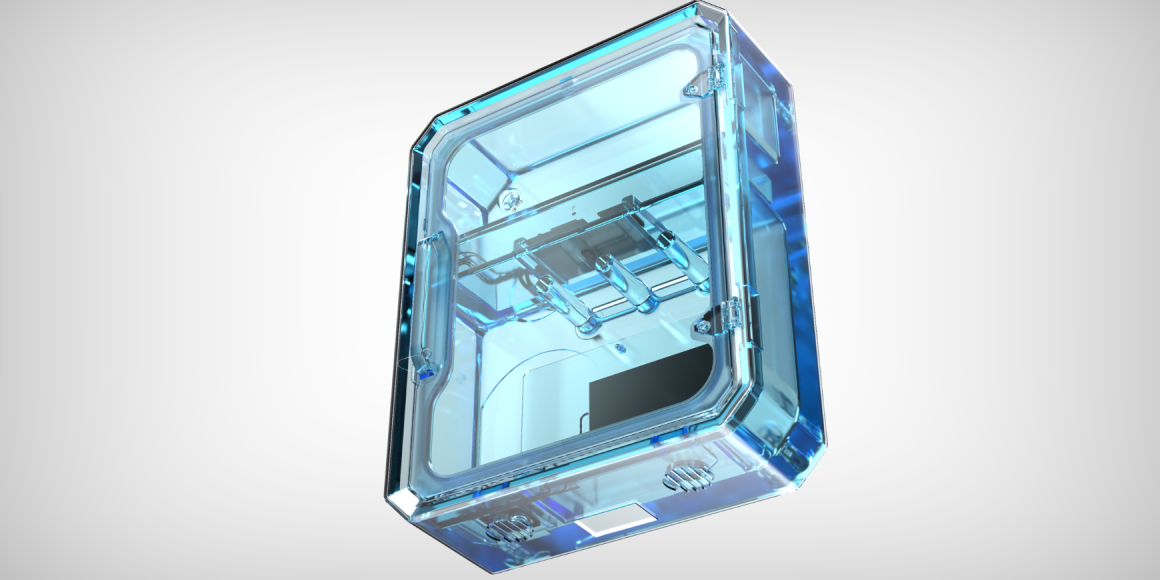
The electronics went through 3 to 5 iterations, mainly due to the need to use a more powerful heater - this was a result of the high thermal conductivity of the glass front (after replacing the plexiglass with tempered glass), which required a change in the component layout.
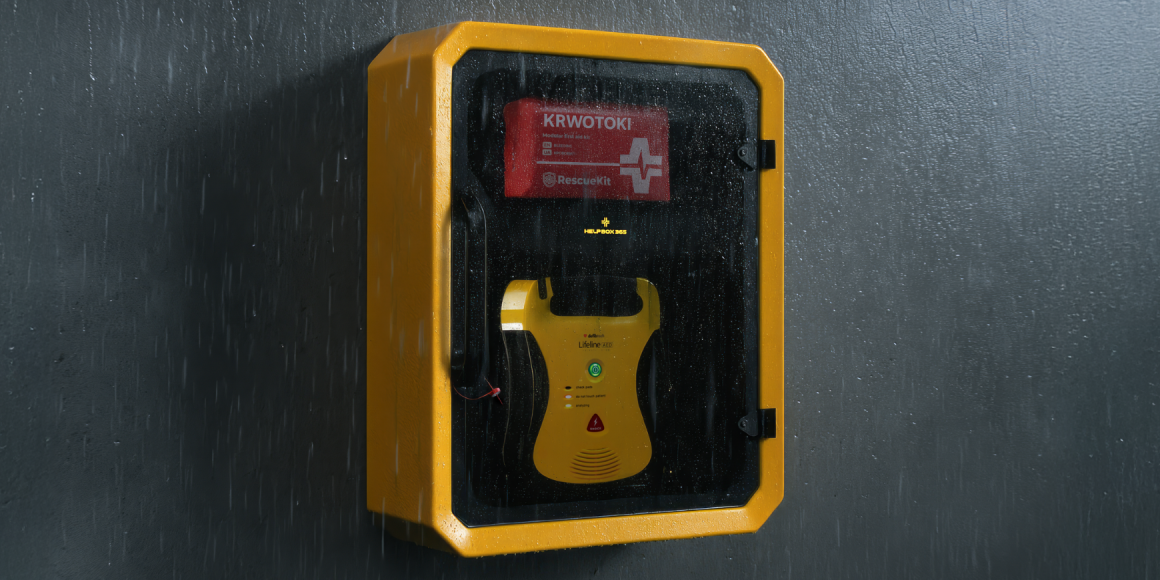
We designed the control logic so that when it gets too hot inside the cabinet, a fan turns on to equalize the temperature with the ambient environment; when it gets too cold, a heater turns on to keep the temperature above freezing even when it’s as cold as -20°C outside. In extreme situations (high temperature and humidity at the same time), the system prioritizes maintaining the proper temperature over humidity.
We prepared the device for certification against the European CE and RED standards (for devices with radio transmitters/receivers), as well as for IP rating tests.
We oversaw the proper implementation of the design and electronics, working closely with an experienced client representative responsible for bringing the product to market.
The system was designed to ensure stable communication with an online platform that provides real-time updates on the device's status and automatically sends a signal to the central system when the AED's electrodes or battery need to be replaced. Monitoring covers the technical condition of the cabinet (completeness of equipment, integrity of the seal) - it is not visual surveillance (CCTV). We consider the technical design complete with the launch of pilot production, although our collaboration with the client continues in the form of support and minor updates.
Every product design is the result of a team effort. It never boils down to one person, but every project has its lead designer or lead contributors. If you want to know more about our current team, visit our team page.


Schedule an initial talk and get to know us better! You already have a basic brief? Send it over so we can have a more productive first meeting!
a meeting
