
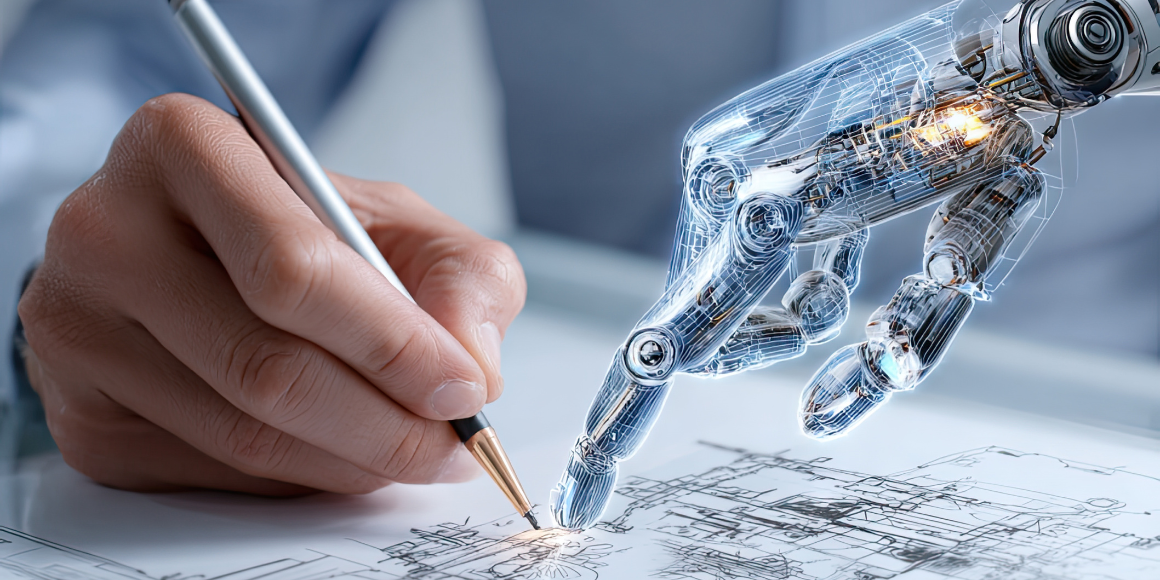
The industrial design landscape is experiencing a fundamental transformation. Artificial intelligence, once relegated to science fiction, has become an integral part of the product development process, reshaping how designers conceptualize, create, and refine products. This technological revolution is not just changing workflows—it's redefining the very nature of design collaboration between humans and machines.
The Current State of AI in Industrial Design
Modern AI applications in industrial design span the entire product development lifecycle. Text-to image generators like Midjourney, DALL-E, and Stable Diffusion have become commonplace tools for concept generation and visual ideation. Meanwhile, machine learning algorithms are increasingly used for requirement analysis, extracting customer insights from reviews and market data to inform design decisions.
Recent research indicates that AI is being adopted across all stages of the design process. In the problem definition phase, natural language processing tools analyze customer feedback and market trends to establish clear design objectives. During solution generation, AI assists with ideation and concept development, while in evaluation phases, machine learning algorithms help optimize prototypes and predict user preferences.
The integration isn't uniform across all design stages, however. Studies show that AI excels in divergent thinking phases—where designers explore possibilities and generate ideas—but faces limitations during convergent phases that require precise iteration and refinement. This distinction is crucial for understanding where AI can most effectively augment human creativity.
Transforming the Design Process
Enhanced Ideation and Concept Generation
AI's most immediate impact lies in accelerating the ideation process. Designers report using generative AI tools to overcome creative blocks, generate mood boards, and explore visual concepts that might not have emerged through traditional brainstorming. The technology excels at producing rapid variations on themes, allowing designers to explore broader solution spaces in shorter timeframes.
One compelling example involves designers using AI-generated images as inspiration for physical products. Rather than replacing human creativity, these tools serve as sophisticated reference generators, producing unique visual starting points that designers then interpret, refine, and develop into manufacturable products.
Improved Customer Understanding
Machine learning has revolutionized how designers interpret customer needs. Advanced text analytics can process thousands of product reviews, identifying patterns in user preferences and pain points that might escape manual analysis. This data-driven approach enables more targeted design decisions and helps prioritize features that truly matter to end users.
The technology is particularly valuable in extracting functional requirements from design documentation, automating what was previously a time-intensive manual process. This capability allows design teams to focus more energy on creative problem-solving rather than administrative tasks.
Streamlined Collaboration and Communication
AI is also transforming how design teams communicate concepts across disciplines. Generative tools help create visual narratives and "boundary objects"—shared reference points that bridge gaps between designers, engineers, marketers, and other stakeholders. These AI-assisted visualizations can rapidly communicate design intent without requiring extensive manual illustration work.
Current Limitations and Challenges
Despite its promise, AI in industrial design faces significant constraints. The technology struggles with precision control required for detailed product refinement. Current generative models often produce outputs that are structurally unfeasible or fail to account for manufacturing constraints, ergonomics, and material properties—critical considerations in industrial design.
Research reveals that AI tools can sometimes hinder high-performing design teams while helping lower-performing ones. This paradox suggests that the technology's value depends heavily on how it's integrated into existing workflows and the skill level of users.
Control and Predictability Issues
Many designers express frustration with AI's "black box" nature. Unlike traditional design tools that offer precise control, current AI systems can be unpredictable, making it difficult to achieve specific outcomes through iteration. This limitation is particularly problematic in convergent design phases where precise refinement is essential.
Compliance and Intellectual Property Concerns
Legal and ethical considerations present additional challenges. Many companies have restricted AI usage due to intellectual property concerns, as current models are trained on vast datasets that may include copyrighted material without permission. Compliance issues around data privacy and confidentiality have led some organizations to prohibit AI use in professional settings.
.png)
The Human-AI Collaboration Model
Rather than replacing designers, AI is emerging as a collaborative partner that augments human capabilities. Research consistently shows that the most successful implementations treat AI as "clay to play with"—raw material that designers shape and refine using their expertise and judgment.
Experienced designers demonstrate greater adaptability to AI tools, viewing them as opportunities rather than threats. They leverage their metacognitive skills—their ability to understand and control their own thinking processes—to effectively integrate AI outputs into their design workflow while maintaining creative control.
The Importance of Design Experience
Studies reveal that designers' attitudes toward AI correlate strongly with their experience level and sense of control. Senior designers with well-developed design sensibilities are more likely to see AI as empowering, while junior designers may feel threatened by the technology. This suggests that design education and experience remain crucial for effective human-AI collaboration.
Future Implications and Considerations
Evolving Skill Requirements
The integration of AI is reshaping the skills landscape for industrial designers. While traditional skills like sketching and 3D modeling remain important, designers increasingly need to develop competencies in AI prompt engineering, data interpretation, and human-AI collaboration strategies.
Design sensibility—the ability to understand user needs, cultural contexts, and design appropriateness —becomes even more critical in an AI-augmented environment. As machines handle more routine tasks, human designers must focus on higher-order thinking: problem framing, ethical considerations, and holistic system design.
Ethical Considerations
The rise of AI in design raises important ethical questions. Issues around bias in AI outputs, environmental impact of AI systems, and the displacement of certain design roles require careful consideration. Designers and organizations must navigate these challenges while harnessing AI's benefits responsibly.
The Path Forward
Industry evidence suggests that successful AI integration requires organizational support, clear policies, and ongoing education. Companies that provide access to AI tools, establish usage guidelines, and foster peer learning environments see better outcomes than those leaving employees to navigate AI adoption independently.
The technology's rapid evolution means that current limitations may be temporary. Advances in AI control mechanisms, specialized design-focused models, and better integration with traditional design tools promise to address many existing challenges.
Conclusion
Artificial intelligence is fundamentally changing industrial design, but not in the ways many initially predicted. Rather than replacing human designers, AI is becoming a powerful collaborative tool that amplifies creative capabilities and accelerates various aspects of the design process.
The most successful applications focus on augmenting human creativity rather than automating it. AI excels at generating inspiration, analyzing data, and handling routine tasks, while humans provide the critical thinking, cultural sensitivity, and strategic direction essential for meaningful design outcomes.
For design professionals and organizations, the key lies not in wholesale adoption or rejection of AI, but in thoughtful integration that leverages the technology's strengths while preserving the uniquely human aspects of design thinking. As this technology continues to evolve, the designers who thrive will be those who master the art of human-AI collaboration while maintaining their core design sensibilities and creative vision.
The future of industrial design isn't about choosing between human creativity and artificial intelligence—it's about orchestrating their combined potential to create products that better serve human needs and aspirations.




Schedule an initial talk and get to know us better! You already have a basic brief? Send it over so we can have a more productive first meeting!
a meeting
