

In the era of digital transformation, Digital Twin technology is revolutionizing how enterprises design and develop new products. Digital twins, being virtual replicas of real objects, processes, or systems, are becoming an indispensable tool in modern product development, offering unprecedented opportunities for optimization, testing, and innovation.
What is a Digital Twin?
A digital twin is a virtual representation of an object or system designed to accurately reflect a physical object, utilizing real-time data to update itself along its lifecycle and predict failures and opportunities for change. In the context of product development, a digital twin enables engineers and designers to create virtual prototypes that can be tested, modified, and optimized without the need to build physical counterparts.
This technology combines advanced 3D modeling, data analytics, artificial intelligence, and the Internet of Things (IoT) to create comprehensive simulation environments that mirror the real properties and behaviors of products.
The Growing Value of the Digital Twin Market
The significance of Digital Twin technology in industry is confirmed by the dynamic growth of this market. The global digital twin market size was estimated at USD 24.97 billion in 2024 and is projected to reach USD 155.84 billion by 2030, growing at a CAGR of 34.2% from 2025 to 2030. According to McKinsey's latest research, 70% of C-suite executives at large enterprises are already exploring and investing in digital twin technologies, particularly in production operations.
Key Applications of Digital Twin in Product Design
Virtual Prototyping
Digital twins can serve as virtual prototypes during the design phase and be adapted to test different simulations or designs before investing in solid prototypes. This saves time and costs by reducing the number of iterations required to bring a product to production.
Through this technology, design teams can:
- Test different design variants in a virtual environment
- Analyze the impact of structural changes on product performance
- Predict potential problems before the production stage
- Optimize materials and components without physical testing
Process Simulation and Optimization
Digital twins allow manufacturers to simulate and optimize product designs before physical production, helping to accelerate product development cycles through rapid prototyping, testing and iteration, leading to faster product launches. The technology enables comprehensive analysis of the entire product lifecycle, from concept to disposal.
Personalization and Customization
Digital Twin opens new possibilities in creating personalized products. By utilizing data on user preferences and behavioral analysis, companies can create digital models tailored to individual needs and then optimize the production process for mass customization.
Business Benefits of Digital Twin Implementation
Cost and Development Time Reduction
Integrating digital twin technology in early stages of product development allows companies to save money by leveraging digital twins to optimize processes. Eliminating the need to create numerous physical prototypes significantly reduces R&D costs while accelerating the entire design process.
Predictive Maintenance and Performance Optimization
Through real-time data analysis, digital twins improve production efficiency, reduce downtime, and enhance quality management. Predictive maintenance helps identify bottlenecks, while real-time data optimizes workflows.
Better Product Quality
Digital Twin enables thorough analysis of every aspect of a product before its physical creation. This makes it possible to:
- Identify potential design flaws
- Optimize performance parameters
- Test resistance to various operating conditions
- Ensure compliance with industry norms and standards
Industries Utilizing Digital Twin
Automotive Industry
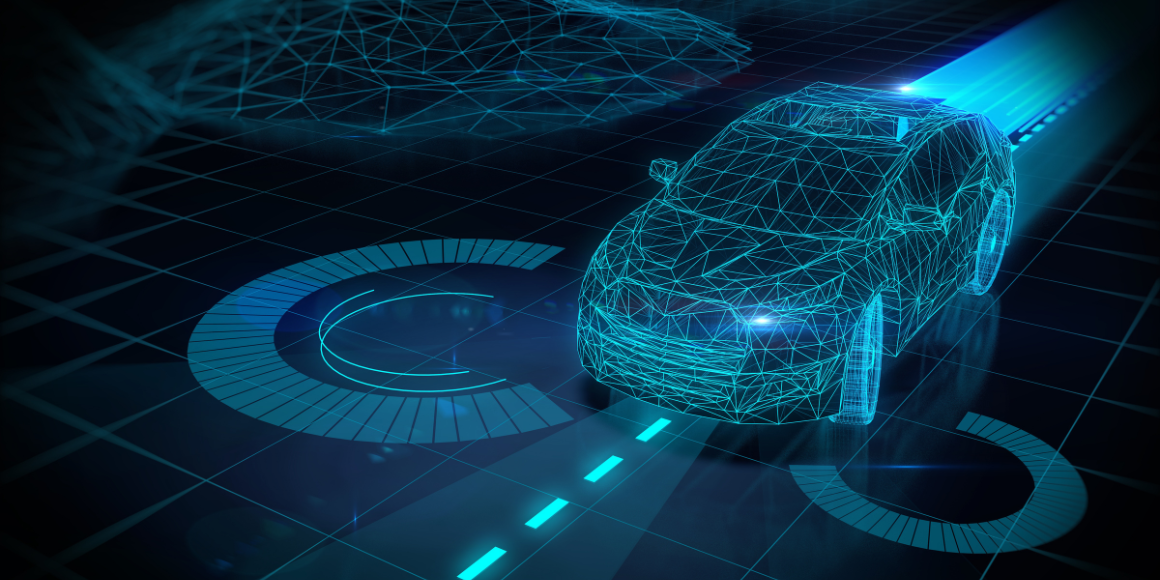
Automotive giants like Tesla and Ford use digital twins to design vehicles, optimize propulsion systems, and test autonomous driving functions in safe virtual environments.
Aerospace and Aviation
In the aviation industry, Digital Twin enables simulation of complex aircraft systems, testing of new composite materials, and aerodynamic optimization without the need for expensive wind tunnel tests.
Electronics and High-Tech
Technology companies utilize digital twins to design chips, integrated circuits, and IoT devices, which allows for predicting their performance in various operational scenarios.
Implementation Challenges and Barriers
Technological Complexity
Digital Twin implementation requires advanced IT infrastructure, including cloud computing systems, big data analytics tools, and IoT platforms. Digital twins can be integrated with existing systems, but it must be ensured that current infrastructure supports IoT sensors and has adequate network bandwidth.
Implementation Costs
Initial investments in Digital Twin technology can be significant, encompassing software and hardware purchases, personnel training, and business process reorganization.
Data Security
Digital twins generate and process enormous amounts of sensitive data about products and processes. Ensuring an appropriate level of cybersecurity becomes a key challenge for organizations.
The Future of Digital Twin in Product Development
Digital twins simulate properties of new materials at the atomic level, accelerating the discovery and development of next-generation materials with innovative properties. Digital twins in industrial environments continuously experiment with new production processes, materials, and designs to accelerate innovation.
The development of artificial intelligence, machine learning, and 5G technologies will drive further evolution of Digital Twin. The future of this technology includes:
- Autonomous Design: AI systems using Digital Twin for independent product design and optimization
- Quantum Digital Twins: Utilizing quantum computing to simulate extremely complex systems
- Metaverse Integration: Integrating digital twins with virtual environments for collaborative design
Conclusion
Digital Twin represents a breakthrough technology that fundamentally changes the approach to product development. Incorporating digital twins into design planning enables manufacturers to innovate more efficiently, respond quickly to market requirements, and create products that are not only high-quality but also sustainable.
Despite implementation challenges, the benefits of utilizing Digital Twin – from cost and development time reduction, through product quality improvement, to enabling large-scale personalization – make this technology indispensable in the modern product development ecosystem.




Schedule an initial talk and get to know us better! You already have a basic brief? Send it over so we can have a more productive first meeting!
a meeting
